No products in the cart.
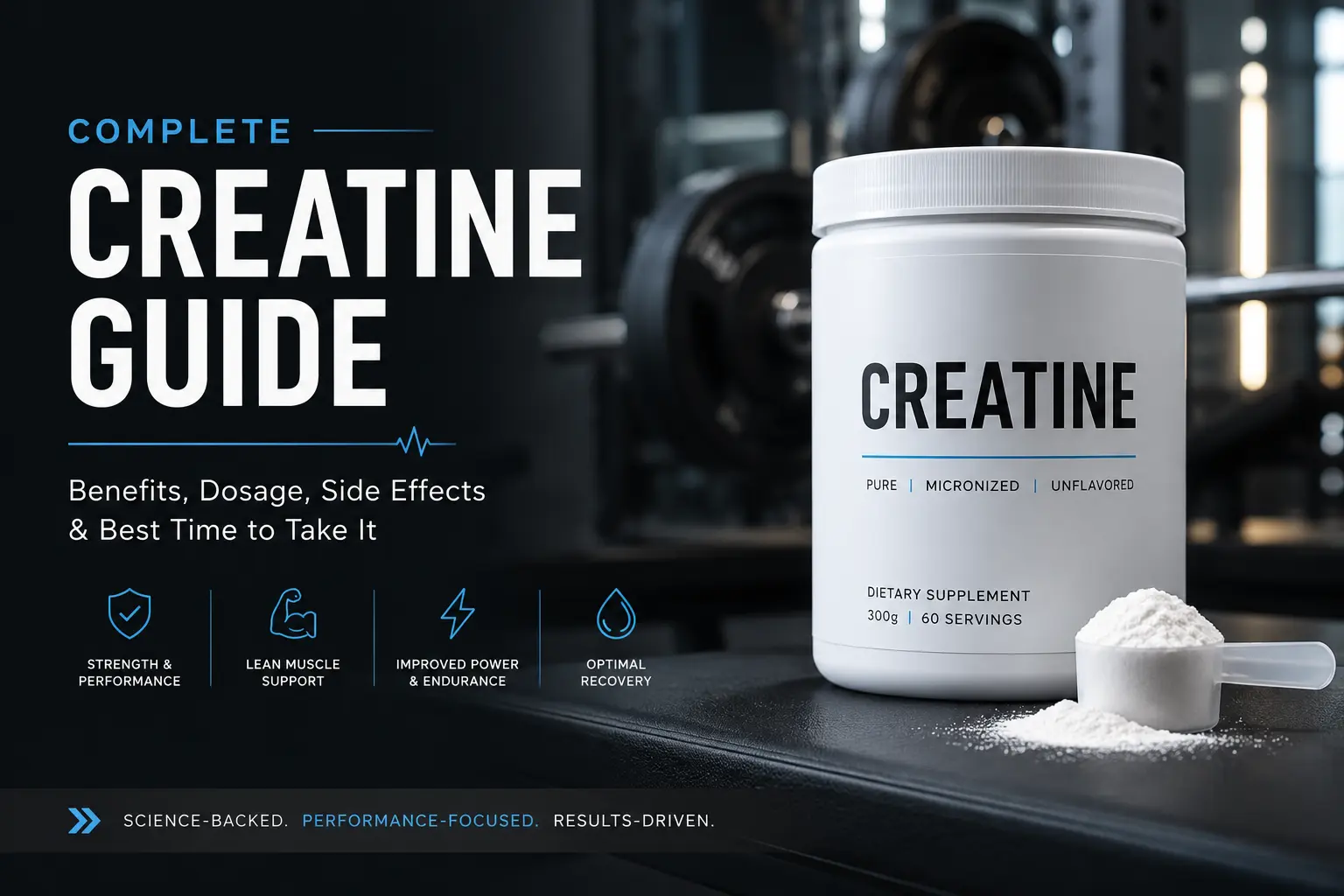
Creatine is one of those supplements that almost everyone in the gym has an opinion about. One person tells you it changed their workouts. Another says it just makes you hold water. Someone else, usually very confidently, claims it damages your kidneys or causes hair loss.
So what is actually true?
The simple answer: creatine is one of the most researched sports supplements available, and for most healthy adults, it is both effective and safe when used properly. It is not magic. It will not replace training, food, sleep, or consistency. But it can help you train a little harder, recover a little better between high-intensity efforts, and gradually build more strength and muscle over time.
That “little” matters. An extra rep here. A slightly heavier set there. Better power output during repeated efforts. Over weeks and months, those small improvements can turn into noticeable progress. This guide breaks down what creatine is, how it works, its benefits, dosage, side effects, loading phase, best time to take it, and whether creatine is actually worth adding to your routine.
What Is Creatine?
Creatine is a naturally occurring compound stored mostly in your muscles. Your body makes it from amino acids, and you also get small amounts from foods like red meat and fish. Around 95% of the body’s creatine is stored in skeletal muscle. That matters because skeletal muscle is where creatine does most of its useful work.
Here is the technical part, but stay with it. Your muscles use ATP, or adenosine triphosphate, as a fast energy source during explosive activity. Think heavy lifting, sprinting, jumping, or pushing through a tough set of squats. The problem is that ATP runs out quickly. Creatine helps your body regenerate ATP faster.
That means your muscles may be able to keep producing force for slightly longer during short, intense efforts. In real-world terms, creatine may help you:
- Lift a little heavier
- Complete more repetitions
- Maintain power during repeated sets
- Recover better between short bursts of effort
- Improve overall workout volume
Creatine does not directly “build muscle” in the way protein supports muscle repair. Instead, it improves the conditions that help muscle growth happen.
How Creatine Works
Let’s imagine a hard set of bench press. The first few reps feel strong. Then, very quickly, your muscles start losing that sharp force output. This happens partly because your immediate ATP supply is limited.
Creatine phosphate steps in as a backup system. It donates a phosphate group to help regenerate ATP. More available ATP means your muscles can continue performing high-intensity work for a little longer. Not forever. Not dramatically like a movie transformation scene. But enough to matter.
This is why creatine is especially useful for activities that involve short bursts of power, such as:
- Weight training
- Sprinting
- Football
- Rugby
- Basketball
- Wrestling
- Powerlifting
- High-intensity interval training
Creatine is less about “feeling” something immediately and more about improving repeated performance over time.
Creatine Benefits
Creatine has stayed popular for decades because it actually does what many supplements only claim to do.
Increased Strength
This is the big one. Creatine supplementation is strongly linked with improved strength output, especially when combined with resistance training. Many users notice better performance in compound lifts such as squats, deadlifts, bench press, overhead press, and rows. It will not add 20 kilograms to your lift overnight. But it may help you progress more consistently, especially when your training, nutrition, and recovery are already in place.
Better Muscle Growth
Creatine supports muscle gain in more than one way. First, it can help you train harder. More reps, more load, or better training volume can create a stronger muscle-building stimulus. Second, creatine increases water content inside muscle cells. This often makes muscles look fuller. Some people mistake this for bloating, but the water is largely stored within the muscle, not just sitting under the skin. That fuller look is one reason people often notice early weight gain after starting creatine.
Improved Workout Performance
This benefit sounds boring until you experience it. A workout where your last few sets stay strong is very different from one where your performance crashes halfway through. Creatine may help you maintain quality across repeated high-intensity efforts.
For bodybuilders, that can mean more useful volume.
For athletes, it can mean better repeated sprint ability or explosive output.
For regular gym-goers, it can simply mean better sessions.
Faster Recovery Between Sets
Creatine helps regenerate ATP, and ATP is central to short-burst performance. Because of this, some people find they recover better between sets, especially when rest periods are short. This does not mean creatine eliminates fatigue. You still need rest, sleep, food, and smart programming. But it can help your muscles bounce back more effectively during repeated intense efforts.
Athletic Performance Support
Creatine is especially useful in sports that involve power, acceleration, repeated bursts, or physical collisions. Examples include football, rugby, sprinting, wrestling, basketball, hockey, and combat sports. Endurance athletes may benefit less directly, but some still use creatine for strength work, sprint finishes, or training support.
Possible Cognitive Benefits
This part is interesting, though still developing. Some research suggests creatine may support cognitive performance, particularly during sleep deprivation, stress, or mental fatigue. The brain also uses energy, and creatine may play a role there too.
That said, most people still take creatine for muscle, strength, and performance not as a primary brain supplement.
Types of Creatine
Supplement companies love variety.
You will see labels like:
- Creatine monohydrate
- Creatine HCL
- Buffered creatine
- Creatine nitrate
- Creatine ethyl ester
- Micronized creatine
Some of these sound more advanced than others. Some are marketed as being easier to absorb or gentler on the stomach. But for most people, the best choice is still creatine monohydrate. It is affordable, widely available, heavily researched, and consistently effective. Micronized creatine monohydrate is simply creatine monohydrate processed into smaller particles, which may mix better in liquid. It is still basically the same core form.
Creatine Monohydrate vs Other Forms
Here is the blunt version: most people do not need fancy creatine. Creatine monohydrate remains the gold standard because it has the strongest research behind it. Other forms may have marketing claims, but they usually do not have enough evidence to prove they are meaningfully better. If you are choosing creatine for strength, muscle gain, or gym performance, creatine monohydrate is usually the smartest option.
What Is the Creatine Loading Phase?
The creatine loading phase is a short period where you take a higher dose to saturate your muscles faster. A common loading approach is:
20 grams per day for 5–7 days, split into 4 smaller doses.
After that, you move to a maintenance dose of 3–5 grams per day. Loading works, but it is not required. You can skip the loading phase and take 3–5 grams daily from the beginning. Your muscles will still become saturated with creatine. It will just take longer, usually a few weeks instead of about a week.
Creatine Dosage
For most healthy adults, the standard creatine dosage is 3–5 grams per day. That is enough for most people. Larger individuals, athletes with high training volumes, or people with more muscle mass may sometimes use slightly more, but 5 grams daily is a reliable target for the majority of users.The bigger issue is not the exact timing or whether you take 3 grams versus 5 grams.
The bigger issue is consistency. Creatine works by gradually increasing and maintaining creatine stores in your muscles. Taking it daily matters more than taking it at the “perfect” minute.
Best Time to Take Creatine
People overcomplicate this. Before workout? After workout? Morning? With carbs? With protein? On an empty stomach?
The best time to take creatine is the time you will remember to take it consistently. Some people take it after training because it fits naturally with a post-workout shake. Others take it with breakfast. Some mix it into water, juice, or a smoothie. There may be slight practical advantages to taking creatine with a meal, especially if it helps digestion or routine adherence. But overall, timing is much less important than daily use.
Can You Take Creatine on Rest Days?
Yes. You should take creatine on rest days too. Creatine does not only work on training days. It builds up in your muscle tissue, so daily intake helps maintain elevated creatine stores. Skipping one day occasionally is not a disaster. But routinely skipping rest days can slow down or interrupt the saturation process. A simple rule take creatine every day, whether you train or not.
Creatine and Muscle Gain
Creatine is strongly linked with muscle gain because it supports the training conditions that drive growth.
It may help you increase:
- Strength progression
- Training volume
- Repetition quality
- Muscle cell hydration
- Recovery between intense efforts
- Long-term performance consistency
But creatine still needs the basics. You need progressive overload. You need enough protein. You need enough calories if your goal is serious muscle gain. You need sleep. You need training that is hard enough to create adaptation. Creatine helps. It does not do the job alone. Think of it as a performance amplifier, not a replacement for the work.
Creatine Side Effects
Creatine is one of the most extensively studied supplements in sports nutrition. For healthy adults, it is generally considered safe when used at recommended doses.
Still, some people may experience minor side effects.
Water Retention
This is the most common effect. Creatine pulls water into muscle cells. This can make muscles look fuller and may increase body weight slightly.
This is not the same as gaining fat. In many cases, the scale goes up because your muscles are storing more water. For people trying to look fuller or perform better, this is often a positive effect.
Mild Digestive Discomfort
Some users experience bloating, cramping, or stomach discomfort, especially when taking large doses at once. This is more common during a loading phase.
To reduce digestive issues, you can:
- Take smaller servings
- Avoid taking 20 grams at once
- Use 3–5 grams daily instead of loading
- Take creatine with food
Temporary Weight Gain Many people gain 1–3 kilograms after starting creatine.
Again, this is usually water stored inside muscle tissue, not fat gain. If you are dieting or tracking your weight closely, this can be confusing at first. But it is a normal response and usually stabilizes.
Does Creatine Cause Hair Loss?
This question refuses to disappear. The concern comes mostly from a small study that observed changes in DHT, a hormone associated with hair loss in genetically susceptible individuals. However, current evidence does not prove that creatine directly causes hair loss.
That distinction matters. Could someone already prone to hair loss be worried about DHT? Understandably, yes. But can we confidently say creatine causes baldness? No. At this point, there is not enough evidence to make that claim.
Does Creatine Damage Kidneys?
For healthy individuals using recommended doses, creatine has not been shown to damage kidneys. This myth likely exists because creatine supplementation can increase creatinine levels, which are sometimes used as a marker in kidney function tests. But higher creatinine from creatine use does not automatically mean kidney damage.
That said, people with existing kidney disease or medical concerns should speak with a healthcare professional before taking creatine.
Healthy person? Standard dose? Creatine is generally considered safe. Existing kidney condition? Get medical advice first.
Who Should Take Creatine?
Creatine may be useful for:
- Beginners starting strength training
- Intermediate and advanced lifters
- Bodybuilders
- Powerlifters
- Field sport athletes
- Sprinters
- Combat sport athletes
- Recreational gym-goers
- People trying to improve strength or muscle gain
You do not need to be an elite athlete to use creatine. If your training includes resistance work or repeated high-intensity effort, creatine may help.
Who Should Avoid Creatine?
Most healthy adults can use creatine safely, but some people should be more cautious.
Speak with a healthcare professional before using creatine if you:
- Have kidney disease
- Have a serious medical condition
- Are pregnant
- Are breastfeeding
- Take medication that may affect kidney function
- Have been advised to limit supplements for medical reasons
Supplements are not automatically safe for everyone just because they are popular.
Frequently Asked Questions
Is creatine good for beginners?
Yes. Creatine is one of the most beginner-friendly supplements because it is affordable, well-researched, and effective for supporting strength and muscle gain.
How much creatine should I take daily?
Most people can take 3–5 grams of creatine monohydrate per day.
Do I need a creatine loading phase?
No. Loading can saturate your muscles faster, but it is optional. Taking 3–5 grams daily works too.
Can I take creatine every day?
Yes. Daily use is recommended, including on rest days.
What is the best type of creatine?
Creatine monohydrate is the best option for most people because it is the most studied, effective, and affordable form.
How long does creatine take to work?
Some people notice performance changes within 1–2 weeks if they load. Without loading, noticeable effects often appear after 2–4 weeks of consistent use.
Does creatine build muscle?
Creatine supports muscle growth indirectly by helping you train harder, perform more volume, and maintain better strength progression. It also increases water stored inside muscle cells, which can make muscles look fuller.
Final Thoughts
Creatine is not a shortcut, but it is one of the few supplements that genuinely deserves its reputation. It supports strength. It can improve high-intensity performance. It may help with muscle gain. It is affordable, simple to use, and backed by decades of research. For most people, the best approach is not complicated: Take 3–5 grams of creatine monohydrate daily.
- Train consistently.
- Eat enough protein.
- Sleep properly.
- Progress over time.
That is where creatine works best not as a miracle supplement, but as a reliable tool inside a solid fitness plan.